What is embedded finance? A revenue playbook for SaaS growth
Learn what embedded finance is, how it works, and why it matters. This guide explains the embedded finance market, real examples, and trends shaping its future.

What do Wix, Toast, Uber, and Shopify have in common?
They move money, issue cards, offer credit, and handle payouts right inside the product.
That’s embedded finance: putting financial tools where customers already work.
For product leaders and founders, embedded finance has become a practical means of growth. It helps increase revenue, keeps customers around longer, and turns a tool into something users rely on every day.
In this guide, we’ll show you how embedded finance works and why it’s becoming a core growth strategy for modern SaaS companies.
We’ll cover the essentials, including:
- What embedded finance means
- Examples across payment, banking, lending, and more
- The infrastructure required to build and run them
- Why financial products can increase revenue and retention
- What it takes to launch and how to do it without reinventing the wheel
Ready to turn your product into a revenue engine?
Whether you want to store, move, spend or lend money inside your product, Unit gives you the infrastructure, tooling, and managed operations to build and run it.
Chat with an expert or see a self-guided product demo.
What does embedded finance look like in practice?
What used to be a trip to the bank or a separate app is now built into the tools people already use to pay, borrow, save, or insure.
Here are some common examples of embedded finance, grouped by type:
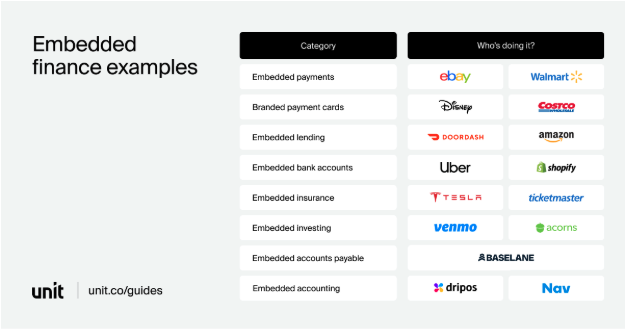
1. Embedded payments
Online checkout was the first widespread use of embedded finance, and it’s now table stakes.
Software companies like Shopify, Wix, and Toast let their users accept card and bank payments directly from their storefront or dashboard.
Today, most payments on the internet happen through embedded flows powered by providers like Stripe, Adyen, and Checkout.com. These tools abstract away the complex parts—payouts, reconciliation, compliance so customers can just plug in and go.
This model also extends to embedded finance for consumer applications. Think: ride-hailing, food delivery, or mobile shopping, where users expect to tap, pay, and move on without leaving the app.
And it works.
More than 73% of Shopify’s revenue now comes from merchant services, the majority of which are embedded financial products like payments and capital advances. That shift has turned Shopify from a software provider into a full financial partner for its merchants.

2. Branded payment cards
From Target’s REDcard to Uber’s driver debit card, branded cards offer rewards and real utility.
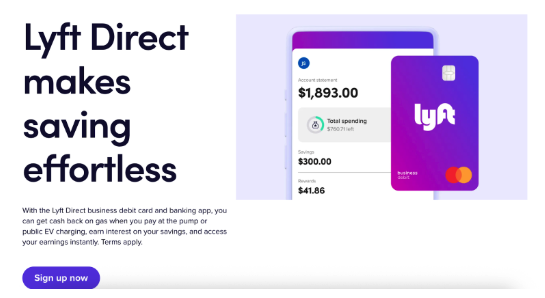
For example, Lyft’s co-branded debit card, issued in partnership with Stride Bank, gives drivers instant access to earnings and cash back on gas.
These cards build loyalty and let software companies offer benefits banks wouldn’t typically design. They can also generate revenue through interchange when customers use the card.
3. Embedded lending
Buy now, pay later (BNPL) is the most visible form of embedded lending. Affirm, Klarna, and Afterpay let users split payments at checkout, increasing conversion for merchants.
But the category goes far beyond BNPL:
- Amazon provides revolving credit lines to eligible sellers.
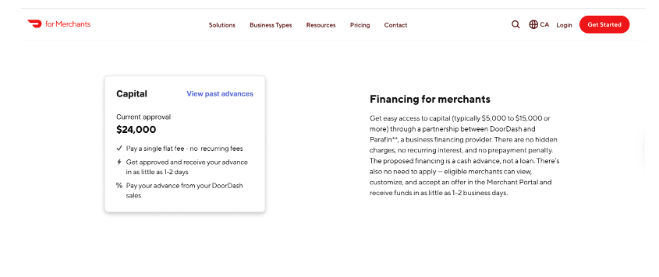
- DoorDash offers cash advances to drivers based on their earnings history.
- Toast and Ramp offer term loans and charge cards tailored to small businesses.
Because software companies see how their customers transact and manage cash flow, they can help lenders provide relevant products aligned with customers’ workflows and financial needs.
4. Embedded bank accounts
Uber was one of the first to launch branded accounts for its drivers.
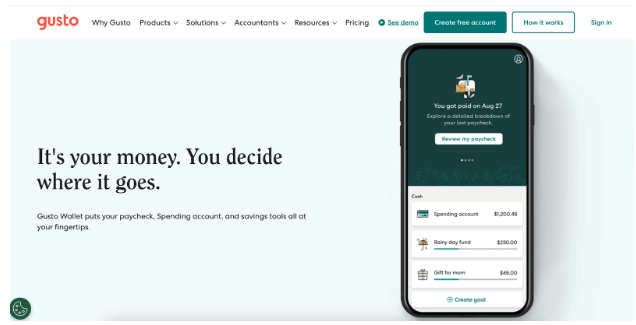
Now, embedded banking is everywhere: Shopify Balance, Gusto Wallet, and AngelList Stack all let users hold and move funds directly in the software they already use, with regulated financial institutions and infrastructure powering the experience.
These accounts often come with built-in savings, debit cards, and faster access to payouts—all under the platform’s brand. The goal is to give users more control over their money while keeping them inside the product.
5. Embedded insurance
Adding insurance at checkout is now common across industries. You’ve probably seen:
- Event insurance for concert tickets.
- Travel insurance when booking a flight.
- Shipping insurance with e-commerce platforms like EasyShip.
Other examples include Tesla offering car insurance in-app, or Baselane letting landlords bundle homeowners insurance into their financial tools.

6. Embedded investing
While still early, some companies are starting to fold investing into everyday products:
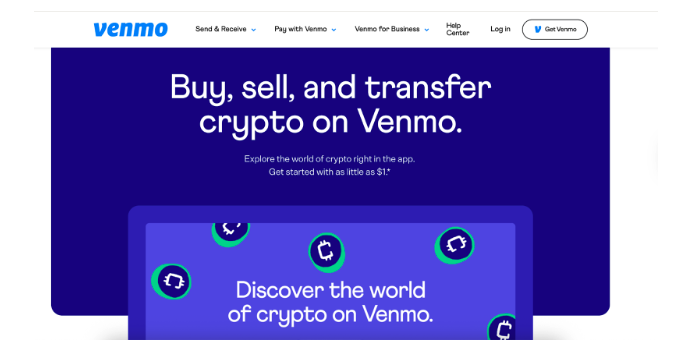
- Venmo allows users to buy crypto directly in the app.
- Acorns rounds up spare change into stock purchases.
As embedded investing matures, we’re likely to see more tools that make wealth-building feel native to everyday digital experiences.
7. Embedded Accounts Payable
Some software companies are embedding tools that let users manage recurring costs like subscriptions, rent, or utilities directly from their dashboard.
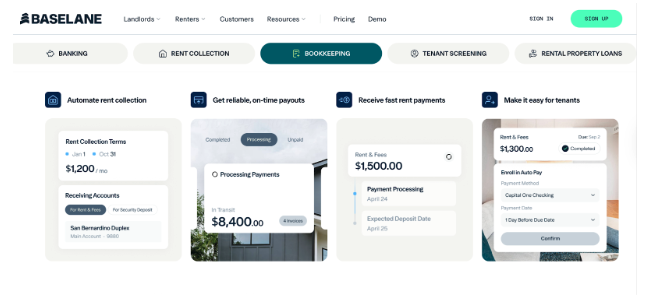
Baselane, for example, gives landlords an all-in-one view of property expenses, allowing them to automate bill payments and track utilities all without leaving the product.
The value here is twofold:
- Users get a clearer view of their cash flow.
- The product becomes more central to everyday financial management.
This creates stickiness and opens the door for layered features like automated payments, real-time alerts, or even financing when cash is tight.
8. Embedded Accounting
For software companies serving businesses, freelancers, or landlords, taxes and accounting are constant friction points.
Embedded tax tools like automatic 1099 generation, real-time expense categorization, or sales tax calculation can turn that pain into a product advantage.
For example, Nav uses embedded accounting features to give small businesses a real-time view of cash flow, categorize expenses, and stay financially healthy—right from their dashboard.
Another example is Dripos, a POS system built for coffee shops, which includes invoicing, financial reporting, and cash management directly within a shared interface. Café owners don’t need a separate accounting tool as it’s all built in.

How embedded finance works
Behind every embedded payment, loan, or card is a complex set of banking and compliance infrastructure. Embedded finance makes that complexity invisible for both the user and the platform.
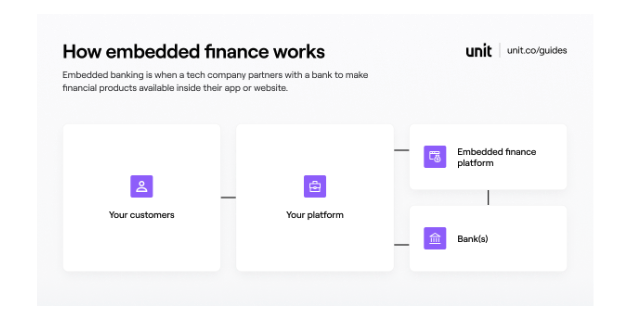
Here’s a breakdown of how it works behind the scenes:
Licensed financial services sit behind the scenes
Most financial products, like bank accounts, cards, and lending, can only be offered by licensed institutions. That means embedded finance always starts with a regulated bank or financial provider in the background.
But instead of building direct integrations with banks (which is slow, rigid, and expensive), companies now use financial infrastructure partners to power their financial products.
Rather than separately integrating with banks, payment processors, card networks, ledger providers and compliance vendors, software companies can build on a financial infrastructure platform like Unit.
Unit brings together direct access to financial rails and account primitives, a single native ledger, the tooling needed to run the product, and managed operations that companies can delegate when needed.
There is always a bank behind the scenes, even if it’s not the one doing all the work. The responsibility in a fintech program is held by the bank - whether it’s generating statements, calculating APY, or processing transactions. What can vary is the way these responsibilities are divided across partners.
Whether you’re offering bank accounts, cards, or lending products, every component—from onboarding and fraud checks to interest calculations —is governed by strict rules. Financial infrastrcuture platforms handle these responsibilities in coordination with the bank.
APIs power the user experience
APIs (application programming interfaces) connect your product to financial infrastructure. They allow you to trigger financial actions—like sending a payment, opening an account, or checking a balance—through simple software calls.
For example:
- When a user sends money, the API talks to the banking system to move funds.
- When they use a branded card, the API routes and settles transactions in real time.
- When they apply for credit, the API handles underwriting, terms, and repayment logic.
APIs take away the heavy lifting so your team can focus on product and UX, not backend data sourcing.
The user sees a branded, seamless experience
While the infrastructure is powered by partners, the experience is fully yours. Most embedded finance offerings are white-labeled or co-branded, so the user sees your name, not the bank’s.
This means:
- Fully-branded bank accounts offered by your app.
- The loan or cash advance appears directly in your dashboard.
- The card carries your brand and rewards.
And because the experience is embedded in context next to payroll, scheduling, or invoicing, it feels natural.
Why embedded finance matters for software companies
Tech companies are becoming essential financial platforms. Embedded finance for business helps you monetize, improve user retention, and stay ahead of customer expectations.

Here’s why it matters:
- Boosts revenue per customer: Embedded finance allows you to monetize financial actions like payments, lending, and account usage. According to McKinsey, companies using embedded finance see 2–5x higher customer lifetime value.
- Lowers acquisition costs: You don’t just drive more revenue—you acquire customers more efficiently. McKinsey reports that embedded finance can reduce acquisition costs by up to 30%. Instead of running separate campaigns or relying on banks, you're meeting customers inside a product they already use and trust.
- Increases retention and product stickiness: Financial features like instant payouts, branded cards, or built-in credit give users a reason to keep coming back. Once customers rely on your platform for both operations and money movement, churn drops and engagement deepens.
- Scales without traditional overhead: A customer can start with one high-value use case and add more as customer needs evolve. Payments can lead to accounts, accounts can support cards, and transaction data can enable lending opportunities. Each product can strengthen the value of others, and a full-stack financial infrastructure partner can support all of them at scale.
Ready to build financial products into your software?
Embedding financial product can help increase revenue, improve retention, and make your product an essential part of your users’ daily lives. But building and running them requires more than APIs. You need deep financial primitives, integrated tooling, a clear operational model, and infrastructure that can support greater complexity as your product scales.
Unit is a financial infrastructure platform for software companies that want to store, move, spend, and lend money inside their products.
Unit provides full-stack financial infrastructure for technology companies that want to store, move, spend and lend money inside their products. Because every ownership model runs on the same underlying infrastructure, you can take on more control over time without replatforming or disrupting customers.
Whether you are building accounts, wallets, payments, cards, or credit, Unit gives you the financial infrastructure and operational capabilities to build the product your use case requires. If you’re interested in learning more, we’d love to chat.
The content in this article is provided for general informational and educational purposes only and should not be construed as legal, tax, accounting, or regulatory advice. Unit does not warrant or guarantee the accuracy, completeness, adequacy, or currency of the information provided, and the content may not reflect all considerations relevant to a particular business, product, or use case.
Frequently asked questions about embedded finance
What are examples of embedded finance?
Here are ten of the most common examples, with real-world companies putting them into practice:
- Embedded payments: Platforms like Shopify and Wix let users accept card and ACH payments directly inside their storefronts. In consumer apps, this is the “tap and go” experience users now expect.
- Embedded lending: DoorDash Capital provides cash advances to restaurant partners, while Amazon offers revolving credit lines to sellers. These tools give users access to capital without leaving the platform.
- Branded payment cards: Uber and Lyft offer debit cards for drivers, enabling instant payouts and rewards like cash back on gas. These cards strengthen loyalty and generate interchange revenue.
- Embedded bank accounts: Tools like Gusto Wallet, AngelList Stack, and Shopify Balance give users the ability to hold funds, pay bills, and track cash flow—without needing a separate bank.
- Embedded insurance: At checkout, customers can add insurance for tickets, travel, or shipping. Tesla, for example, lets drivers manage their car insurance directly in the app.
- Embedded investing: Platforms like Venmo and Acorns let users invest spare change or buy crypto directly from their balance without a separate brokerage account.
- Digital wallets: Embedded wallets (or financial accounts) like those offered by Payoneer or Gusto let users store, send, and receive money inside the product. This helps with retention and creates new revenue paths. Make it easy for your customers to store money without the need for a traditional deposit account.
- Subscription and bill management: Baselane enables landlords to manage rent, utilities, and property expenses from one dashboard, automating cash flow and reducing admin overhead.
- Currency exchange: Businesses with global reach, like Payoneer, offer built-in FX tools that let users convert between currencies without leaving the product.
- Tax services: Tools like QuickBooks and Baselane provide built-in tax tracking, write-off categorization, and 1099 prep, saving users hours and reducing churn during tax season.
How big is the embedded finance market?
The embedded finance market was valued between $82 and $108 billion in 2023 and is projected to reach $146–148 billion by 2025. By 2030, forecasts range from $690 billion to $7.2 trillion, depending on scope and adoption across sectors. Growth is driven by vertical SaaS platforms, B2B tools, and rising global demand for integrated financial services.